
Startup Pitch Recipe 👩🏻🍳
This week we are featuring articles on crafting an elevator pitch, decoding a term sheet, and understanding why 2024 had a record number of flat and down rounds.

Greetings! Hard to believe we are already in March.
👩🏻🍳 Startup Pitch Recipe
The Founder Institute discusses the different types of pitches a startup founder should hone—a one-sentence pitch, a one-minute pitch, & an investor pitch. The one-sentence pitch is pretty self-explanatory; it explains what you do, who you serve, and why it matters. The one-minute pitch expands on the elevator pitch with details like market value, competition, business status, and your "ask”, while the investor pitch is longer and includes highlighting prerequisites like a strong idea, prototype, and financial model.
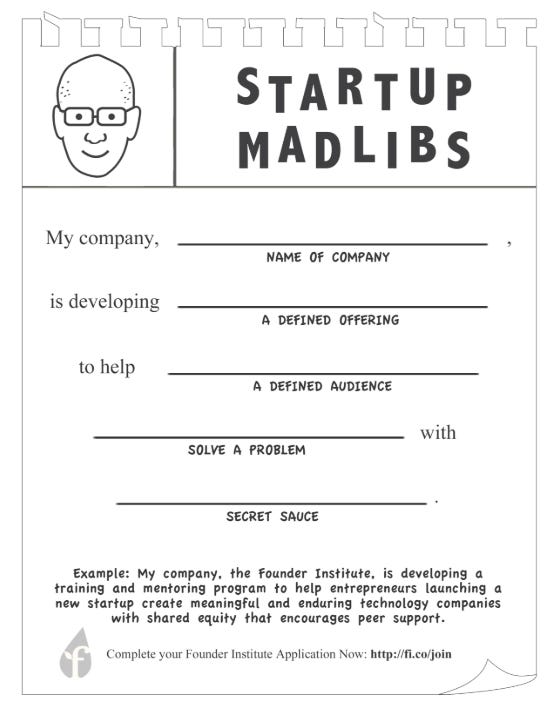
STV Take: Ultimately, the job of a startup CEO is to get others—investors, employees, customers—bought into the vision (episode 46). A founder might have 30 seconds or 30 minutes, but the outcome is dependent on a founder conveying the most important information in whatever length of time is had.
This article provides a valuable framework for founders to nail the one-sentence (see above image) and the one-minute pitches, which are crucial for networking events. These events are often noisy and chaotic, so investors (or any other stakeholder) need a succinct explanation to determine if a follow-up conversation is worthwhile. If the pitch is too lengthy, founders risk losing the investor's attention before they can generate enough interest.
🌀 Decoding the Term Sheet
The team at Dogwood Ventures shared an article that discusses the key clauses in the term sheets they issue. A couple of terms worth highlighting are the following:
Shadow series shares: This allows the terms of prior investments from convertible notes or SAFEs to be honored without giving those investors extra benefits that might be unfair to new investors.
Founder vesting: This aligns the founder with their company in the long-term and means they’ll receive their equity percentage over time. Dogwood gives founders 25% of their equity share upfront, with the remaining amount granted over the following three years.
D&O insurance: Insurance to protect a company’s board of directors and officers from personal financial liability.
“[W]e’re breaking down our term sheet. The goal is simple: to help founders understand each term, why they are included, and increase the speed of negotiations and general understanding.” — Joséphine Kant
STV Take: A term sheet can be hard to parse through. It’s filled with jargon and most founders have heard at least one horror story of investment gone awry, which can make the term sheet review process especially fraught. Understanding the why behind certain terms can help founders know where they should negotiate, while having data on what is standard practice can help those negotiations go more smoothly. And, of course, when in doubt seek legal counsel with startup experience. Any lawyer won’t do. Just like you wouldn’t go to your dentist for a heart issue, don’t go to your real estate attorney for startup advice. For tips on how to interview a startup lawyer, see episode 90.
🎢 What’s Behind 2024’s Flat and Down Rounds?
Pitchbook reports that almost 25% of U.S. venture capital deals in 2024 were flat or down rounds. This trend is primarily attributed to companies that secured funding in 2022 at inflated valuations. These companies are now returning to the market and discovering that their growth has either matched or fallen short of their previous valuations.
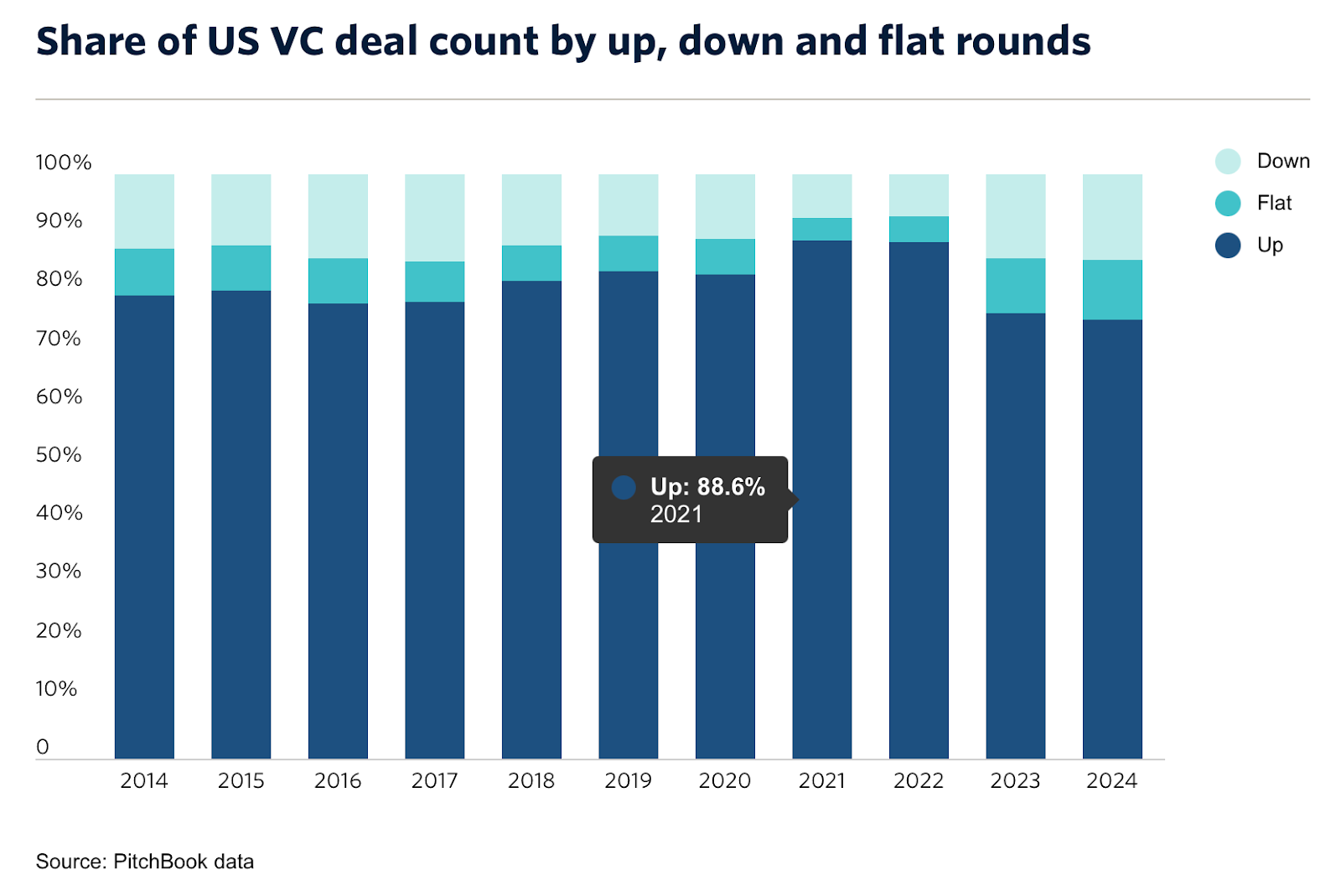
STV Take: This scenario represents the danger of raising money at too high of a valuation. At some point, the fundamentals of the business will matter. As the article points out, the silver lining is that these companies that might have been overvalued previously are still able to raise capital. Sure, a down round might be messy and less than ideal, but it’s better than running out of capital.