
We're baaack! 👋
This week we are bringing you data… lots of data! 📚 📚

Welcome back! The holidays already feel a million miles away but we hope you found some time to recharge and are having a great start to 2026!
Quick programming note: As we move into what should be a (hopefully) very active year, we’re going to dial back the frequency of these newsletters from weekly to biweekly.
✍️ State of Startups 2025
Carta released its State of Startups 2025 report containing different data points on the startup ecosystem. A couple of interesting ones:
The amount of capital invested in the first three quarters of 2025 outpaced 2023 and 2024. Q4 25 is lower than prior years, but that data is still trickling in.
The have-and-have-nots trend continues. While total capital raised rose in 2025, deal count did not, meaning more money went into fewer companies.
The number of down rounds continued to decrease but is still historically high.
Source here.
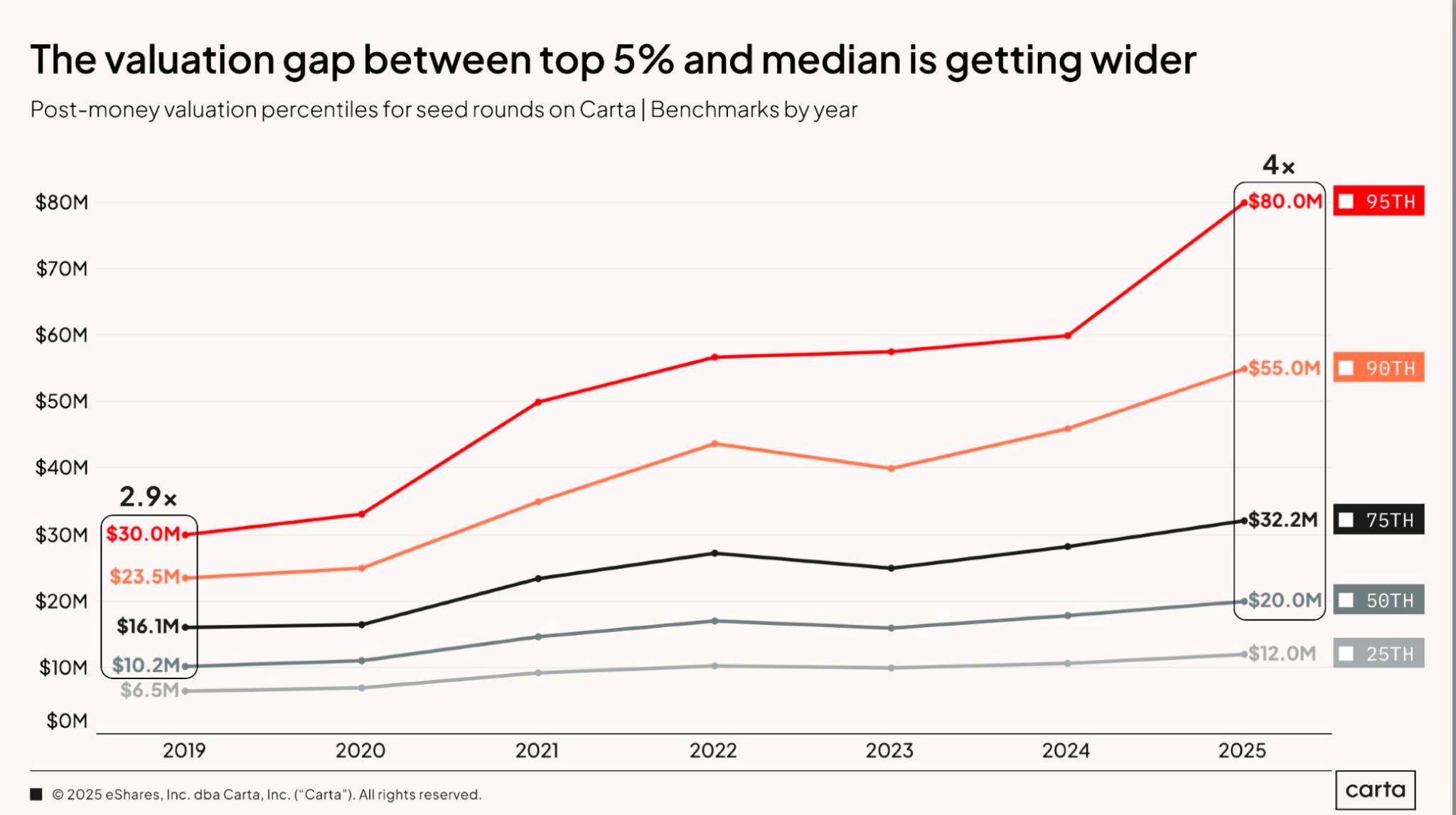
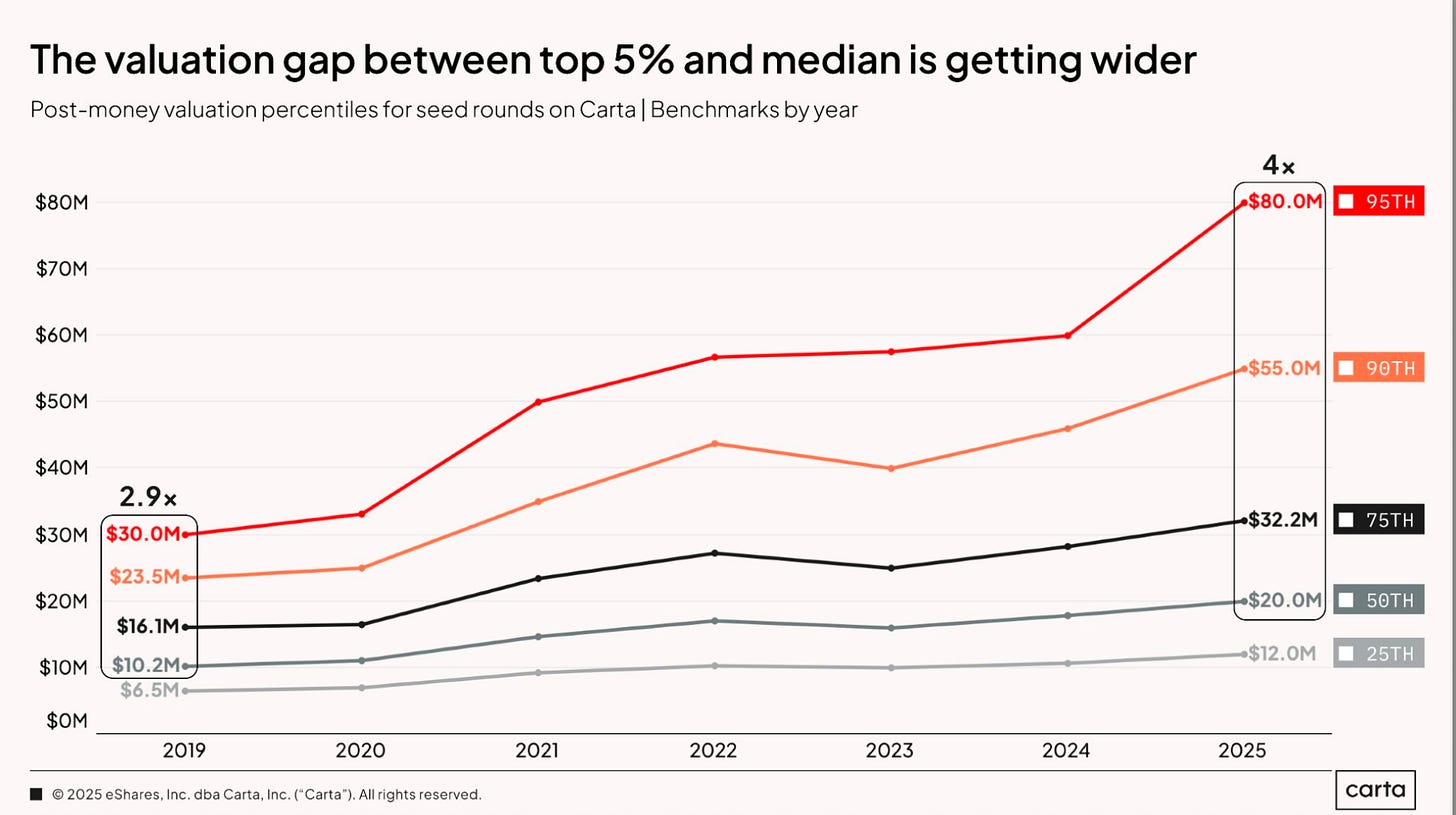
STV Take: There are many slides in this report worthy of a screenshot, but this one is particularly astounding because it quantifies the tale of two markets we’ve been discussing for years. We often talk about bifurcation at Seed, but seeing the premium for top-tier deals expand so aggressively suggests that investors are not just being selective, they are paying historically unprecedented prices to win allocation in the consensus outliers. For founders, the danger lies in anchoring expectations to headlines rather than the median; doing so is the fastest way to stall a fundraise. Unless your metrics place you undeniably in that top bracket, optimize for a valuation that allows you to grow into your next round, rather than one that sets you up for a future down round.
📝 State of Venture
Another take! CB Insights released its annual 2025 report, State of Venture 2025. This one is a bit more robust and includes funding across angels, venture capital, private equity, and corporate venture capital. CB Insights data shows global venture funding came roaring back in 2025, jumping 47% YoY to reach $469B. While cash is flowing, overall deal volume actually dropped by 17%, confirming a market that is deploying massive capital into fewer, safer bets. The primary driver is essentially a single sector: AI companies captured a record 48% of all global venture dollars, while mega-rounds (deals over $100M) accounted for nearly 65% of total funding.
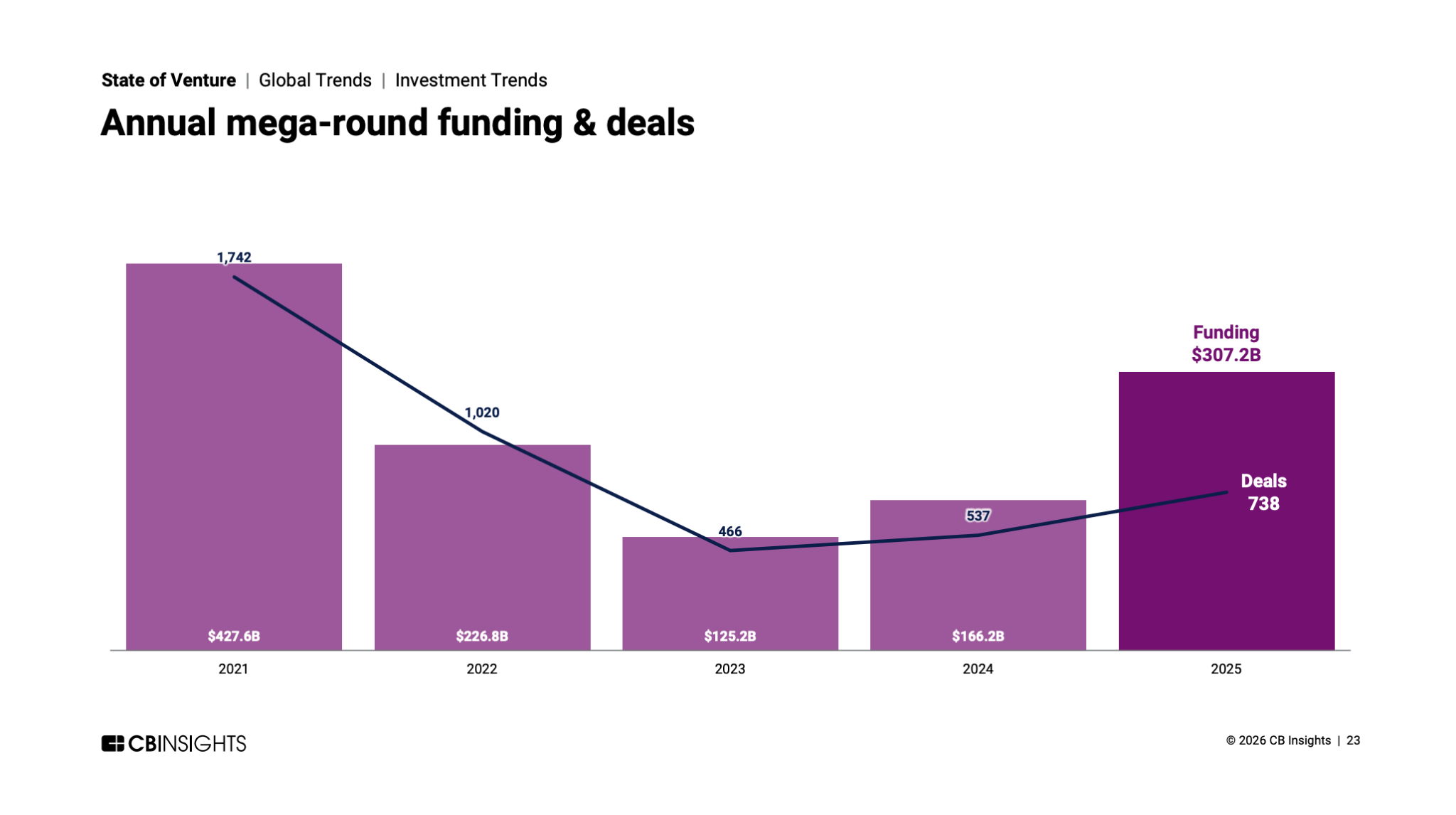
STV Take: If the Carta data showed us the valuation gap, this report reveals the volume gap. The headline that ‘venture is back’ is true but a little misleading for the average founder. Capital is consolidating. Despite the top-line growth, capital availability at the Series A and B rounds for companies building outside of AI remains constrained. Plan your runway assuming 2023-style scarcity rather than 2021-style abundance.
🧑🏫 Techstars Tips for Fundraising
Techstars released the first part of a fundraising series to prepare founders for their first raise. This first part of this series starts with three questions that founders should answer before starting a fundraising process: 1) Is your business venture scale? 2) Are you personally ready? 3) Is VC funding the best way to get capital? The article then goes on to describe why fundraising efforts fail and how to prepare for investor meetings.
“Be honest about other investor interest. The most effective FOMO comes from strong business performance, especially significantly growing revenue and an exceptional team.”
STV Take: We started this newsletter with some intimidating charts about the haves and have-nots of 2025. This article is the tactical antidote. It reminds us that no matter what the current hype cycle is and how your company fits into it, the mechanics of a successful raise remain unchanged. The guide’s emphasis on treating fundraising as a sales funnel—specifically qualifying investors and building relationships before you need the check—is exactly how you bridge the gap between good metrics and a closed round. In a market that is skeptical of everything outside the top 5%, process beats hype every time.